Raith
EBPG5000
The Raith EBPG5000 is an e-beam lithography tool that writes features smaller than 10 nm and places structures on a substrate with an accuracy of less than 20 nm. The Raith EBPG5000 (EBPG5000ES) uses a 100 keV thermal field emission gun, a Gaussian beam, and a 50 MHz pattern generator. The Raith EBPG5200 (EBPG5000 Plus) variant provides a 155 mm writing capability, supports wafers and masks up to 6 inches, and runs its thermal field emission gun at 20, 50, and 100 kV.[1][2]
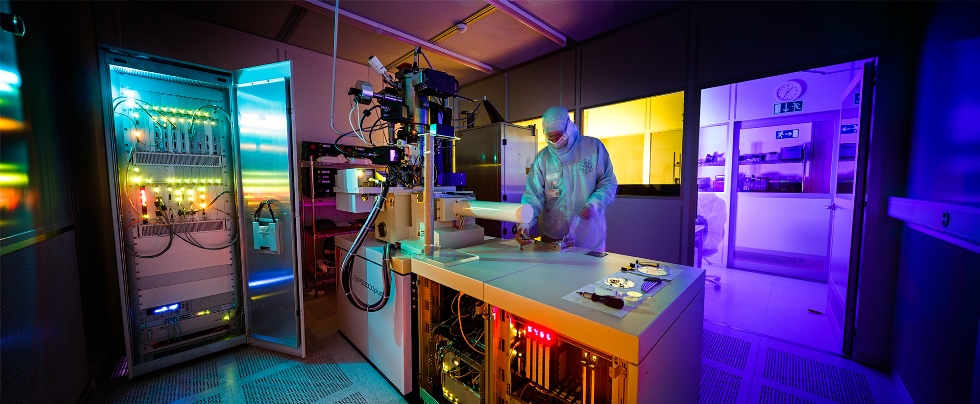
Plate 01Finishing the E-Beam Process on a Raith EBPG 5000+ (Live Streamed)
OnripresenceWatch on YouTube
How it works
The EBPG5000 operates with a 100 keV thermal field emission gun and a Gaussian beam. The system uses a 50 MHz pattern generator for writing the pattern into the resist. Direct write mark detection and alignment software overlay the pattern onto pre-existing marks on the substrate. The system accepts holders for 50 mm, 100 mm, and 150 mm wafers, as well as for 5-inch masks and smaller piece parts. The writing strategy involves scanning the Gaussian beam across the substrate in a vector fashion, controlled by the pattern generator.[1]
What can it run?
Process applications and technology nodes documented for this tool.
- Write lithography
- R&D mask making
- Compound semiconductor application
- Vertical resonant tunnel transistor
- Circular grating resonator
What do the numbers mean?
Power & electrical12
Wafer handling9
- Substrate support (EPFL EBPG5000ES)
- holders for 50 mm, 100 mm, 150 mm wafers, 5‑inch masks and smaller piece parts[1]
- Substrate holders (EPFL EBPG5000ES)
- 50 mm, 100 mm, 150 mm wafers; 5-inch masks; smaller piece parts[1]
- Holders
- holders for 50 mm, 100 mm, and 150 mm wafers; 5 inch masks and smaller piece parts[1]
Optics & imaging15
Performance2
Control & software1
Configuration & options22
- Model identifier (UChicago)
- Raith EBPG5200 E-Beam lithography system (also called EBPG5000 Plus)[2]
Vintage & configurations
Documented models & variants
| Designation | Generation | Vintage | Changes | Source |
|---|---|---|---|---|
| EBPG5000ES | — | — | The EBPG5000ES is a version of the EBPG5000 equipped with a 100 keV thermal field emission gun, Gaussian beam, and 50 MHz pattern generator. | epfl.ch[1] |
| EBPG5200 (also known as EBPG5000 Plus) | — | — | The EBPG5200 is the latest model in the EBPG series, featuring 155 mm writing capability, support for wafers and masks up to 6″, minimum feature size below 8 nm, 20–100 kV operating voltage, and 50/100 MHz pattern generator. | pnf.uchicago.edu[2] |
| EBPG5200 (EBPG5000 Plus) | — | — | Configuration used at UChicago Pritzker Nanofab; 155 mm writing capability, wafers/masks up to 6 in, 20/50/100 kV thermal field emission gun, 50/100 MHz pattern generator, variable field size to 1 mm. | pnf.uchicago.edu[2] |
What replaced it?
Related models
- predecessorRaith EBPG5150— The EBPG5200 is the latest model in the EBPG series, preceded by the EBPG5150.source[2]
What does it need to run?
Site utility requirements, footprint, and infrastructure needed to install and operate this tool. Sourced from public records.
- Pattern generator50 MHz[1]
- Pattern generator50 / 100 MHz[2]
- Acceleration voltage100 keV[1]
- Pattern generator frequency50 MHz[1]
- Pattern generator frequency (EPFL EBPG5000ES)50 MHz[1]
- Operating voltages (UChicago model)20, 50, and 100 kV[2]
- Pattern generator frequency (UChicago model)50 / 100 MHz[2]
- Pattern generator (EPFL EBPG5000ES)50 MHz[1]
- Acceleration voltages (PNF EBPG5200)20, 50, and 100 kV[2]
- Pattern generator (PNF EBPG5200)50 / 100 MHz[2]
- Pattern generator50 MHz pattern generator[1]
- Pattern generator50 / 100 MHz pattern generator[2]
Where are the manuals?
Generated from public-source data on file. Enter your email to access — nothing is published; details are routed privately.
Not publicly documented
Field notes
No research found yet — worked with this tool? Share what you know.
Frequently asked questions
What is the minimum feature size the EBPG5000 can write?
The EBPG5000ES model can write features smaller than 10 nanometers. A comparable model, the EBPG5200, can write minimum features of less than 8 nanometers.[1][2]
What wafer sizes can the EBPG5000 handle?
The EBPG5000ES accepts holders for 50 mm, 100 mm, and 150 mm wafers, as well as 5-inch masks and smaller piece parts. A similar system, the EBPG5200, accommodates wafer sizes up to 6 inches and mask sizes up to 6 inches.[1][2]
What is the pattern generator frequency?
The EBPG5000ES has a 50 MHz pattern generator. A similar system, the EBPG5200, can operate with a 50 or 100 MHz pattern generator.[1][2]
What is the alignment accuracy of the EBPG5000?
The EBPG5000ES can place structures on a substrate with an accuracy of less than 20 nanometers.[1]
Not publicly documented
The following facts about the EBPG5000 are absent from this record as of this revision. First-hand knowledge or a citation closes a gap; every submission is reviewed before publication.
No publicly documented production dates or lifecycle milestones (introduction, end of production, EOL) for the EBPG5000 are on record.
Answerable by: OEM historical records or a trade-press announcement
The control-system platform and OS era of the EBPG5000 are not on record.
Answerable by: an engineer who operated it or OEM installation records
No publicly documented failure modes or field errata for the EBPG5000 are on record.
Answerable by: a field service engineer, process engineer, or maintenance technician
No publicly documented compatible parts, consumables, or accessories for the EBPG5000 are on record.
Answerable by: an OEM parts catalog or a service engineer
No publicly hosted manuals, SOPs, or datasheets for the EBPG5000 are on record.
Answerable by: university cleanroom staff or an OEM application specialist
No research found yet — worked with this tool? Share what you know.
Sources & citations
Sources (3)Every fact above is drawn from these public sources
- [1]epfl.ch — epfl.chepfl.ch
- [2]pnf.uchicago.edu — pnf.uchicago.edupnf.uchicago.edu
- [3]Toronto Nanofabrication Centre (TNFC) - Electrical & Computer Engineering — ece.utoronto.caece.utoronto.ca
Last updated Oct 8, 2026.
Compare with similar tools
View all →
The GCA 6300 DSW is a g-line wafer stepper used for lithography, with source descriptions also identifying related i-line GCA 6300 stepper documentation.
The MA / BA Gen4 Pro Series is a semi-automated mask aligner and bond aligner system supporting wafers up to 150 mm / 200 mm, with capabilities for exposure, UV bonding, fusion bonding, micro- and nanoimprinting, and selective plasma activation.
The MA100 / 150e Gen2 is an automated mask aligner for proximity exposure, supporting wafer sizes up to 150 mm.

The Karl Suss MA6 is a high-resolution semi-automated photolithography mask aligner for research, development, and small-volume production.
